
The Most Expensive AI Contract You Will Ever Sign May Be the One That Looks Cheapest Today.
Once an AI provider begins learning how your organization thinks, you are no longer procuring ordinary software. You are transferring part of your cognitive infrastructure to an outside company.
Before You Sign Another AI Agreement, Watch This.
Your Biggest AI Risk Is Not a Bad Answer.
Your biggest risk is becoming unable to operate without an intelligence provider you do not control. Enterprise AI can accumulate context, shape decisions, mediate workflows, operate tools, and become part of institutional memory. If you cannot inspect it, preserve it, move it, and operate without it, then it is not your intelligence. It is merely rented intelligence.
The FORCE Framework is built on five pillars of contract governance
Each pillar in the framework turns a vague AI contract clause into a clear, testable obligation your legal team can actually enforce.
Fiduciary Custody
Who controls the data, memory, context, and keys?
Operational Continuity
Can the organization continue through change or failure?
Resilience Against Monoculture
What happens if one provider or model family fails?
Control & Organizational Autonomy
Can the customer restrict, inspect, isolate, and roll back?
Egress & Exit
Can the organization leave and continue functioning?
Three Board Decision Gates
Most AI vendors sell you a slick demo. The FORCE Framework holds your contracts to a different standard, one built around the 12 requirements that actually matter.

Who controls the intelligence?
The provider may own its base model. It should not own your accumulated organizational context.

Can we keep operating?
Changes, retirements, outages, and incidents must be governed, testable, and recoverable.

Can we leave?
Egress is receiving files. Exit is preserving capability and continuity somewhere else.
Enterprise AI Implementation Guide
Get the complete framework: One-Page FORCE Checklist The fastest board-ready summary of all five pillars and twelve requirements. Expanded 12 Requirements The expanded executive checklist with outcomes, architecture guidance, and scoring. FORCE Board Brief The complete framework, scorecard, roadmap, questions, and red flags. Provider Due Diligence A vendor-response workbook mapped to all 12 FORCE requirements.
Format
Pages
24
Updated
2026
Get your copy
Enter your details to download the FORCE framework
12 requirements, 5 pillars, 1 clear egress path
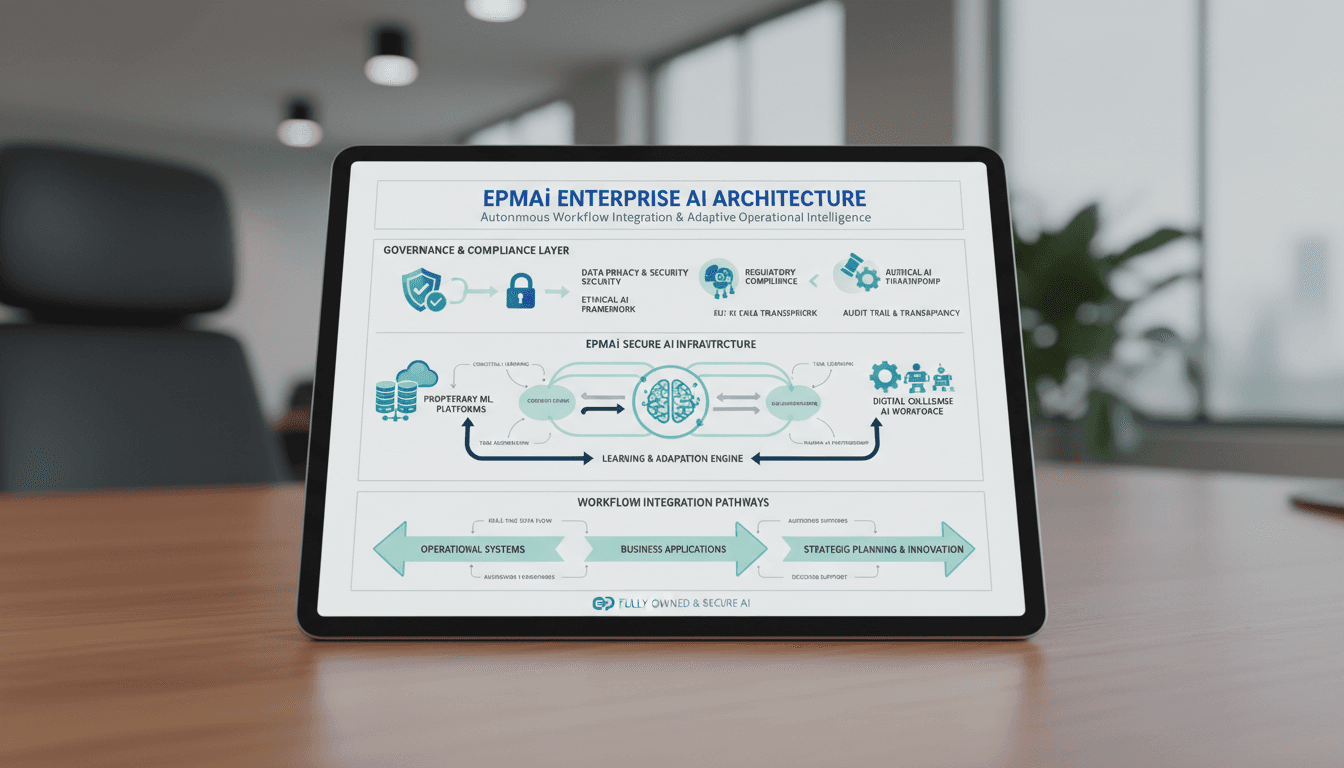
Every gate in the FORCE Framework gives your board a decision point, not a dead end. Clear control keeps your AI fully owned and your exit always open.
12
Contract requirements
Every requirement maps to a board-level gate you can act on.
5
Pillars, one spine
Each pillar gives you control, continuity, and a clean egress.
1
Exit path, always on
Continuity clauses keep your data and access yours, even after a break.
0
Locked-in dependencies
No trap clauses. You stay in control of your AI infrastructure.
The 12 Requirements for Owned AI
Enterprise AI demands more than data residency or vendor promises. These requirements define the operational, contractual, and technical safeguards that let your organization maintain true ownership, control, and continuity.
Architecture Must Match Consequence
Choose the architecture that protects your intellectual property while enabling operational intelligence.
Workload Type
Recommended Architecture
Low Risk
Public, reversible, low sensitivity
Controlled hosted AI
Medium Risk
Internal productivity, limited sensitivity
Private tenant with strong governance
High Risk
Trade secrets, regulated data, strategic decision support
Sovereign private cloud or on-premises
Critical
National security, critical infrastructure, crown-jewel IP
Customer-controlled on-premises; no external inference path; air-gapping where justified
Common questions about FORCE
FORCE is a buyer-side risk framework for evaluating AI infrastructure ownership and exit capability. It's not a certification—it's a practical tool to assess control, continuity, and resilience in your AI deployments.

Request the board brief and adoption checklist
See the 12 requirements applied to your contracts with a free board brief and checklist designed for your next meeting.
A framework is not a guarantee
The FORCE Framework is an independent EPMA framework for general information. It is not legal advice, a certification, or a guarantee of compliance.